
Fiber Speed Test
Fiber optic internet is the fastest and most stable connection available. But are you actually getting the speeds you're paying for? Our continuous monitor verifies your fiber performance over time — not just a single optimistic burst.
Ready to test your Fiber connection?
Our continuous real-time monitor runs directly in your browser. Uncover hidden latency and verify your gigabit speeds.
Launch Real-Time Speed TestThe Fiber Optic Advantage
Fiber optic internet transmits data as pulses of light through glass strands, unlike cable internet which uses electrical signals through copper wires. This fundamental difference gives fiber three critical advantages: symmetrical speeds (your upload matches your download), lower latency (fewer electronic hops), and zero electromagnetic interference (immune to weather, nearby electronics, and signal degradation over distance).
For gamers, this means consistently lower ping and jitter. For remote workers, it means reliable video calls with strong upload performance. For everyone, it means the speed you pay for is the speed you actually get.
Fiber vs. Cable: Side-by-Side Comparison
| Metric | Fiber (FTTH) | Cable (DOCSIS) |
|---|---|---|
| Download Speed | Up to 10 Gbps | Up to 1.2 Gbps |
| Upload Speed | Symmetrical | 10–35 Mbps typical |
| Typical Latency | 5–15ms | 15–40ms |
| Shared Bandwidth | Dedicated line | Shared neighborhood node |
| Weather Immunity | Fully immune | Susceptible to interference |
For a deeper technical analysis, read our full Fiber vs. Cable latency comparison.
How to Properly Test Your Fiber Speed
Connect via Ethernet. WiFi will always show lower speeds than your fiber plan is capable of. For an accurate test, plug a Cat6 cable directly from your router or ONT into your computer.
Close background applications. Cloud backups, software updates, and streaming services all consume bandwidth. Pause them before testing to see your connection's true capacity.
Check your hardware. Your Ethernet adapter, cable, and router all need to support gigabit speeds. A Cat5 cable caps at 100 Mbps. An old laptop NIC might cap at 100 Mbps. These bottleneck the test.
Run the continuous test for 5+ minutes. A single snapshot test can look perfect. Running our monitor continuously reveals stability patterns — does your speed dip at certain times? Does it fluctuate or stay consistent?
Fiber Speed Test FAQ
Am I actually getting the fiber speed I'm paying for?
Why is my fiber connection slow?
Is fiber optic internet faster than cable?
Can my router handle gigabit fiber?
Is 'fiber-to-the-home' the same as 'fiber internet'?
Continue Reading

What Is Latency? Everything You Need to Know
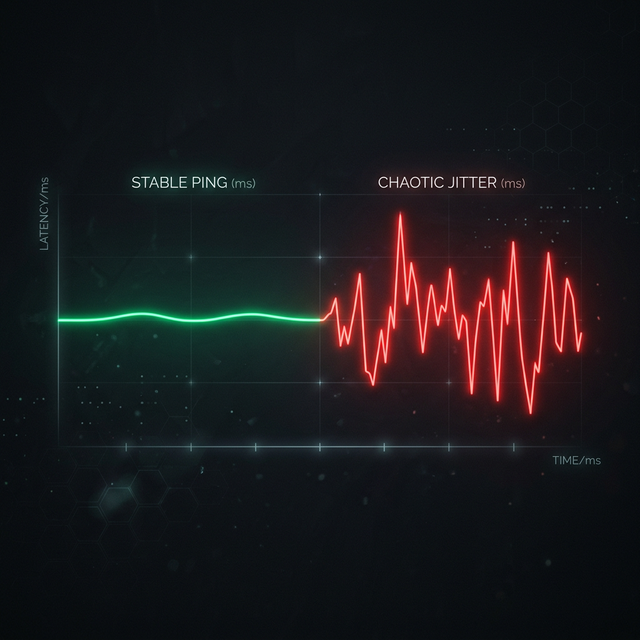
What is Jitter? A Simple Guide to Network Stability
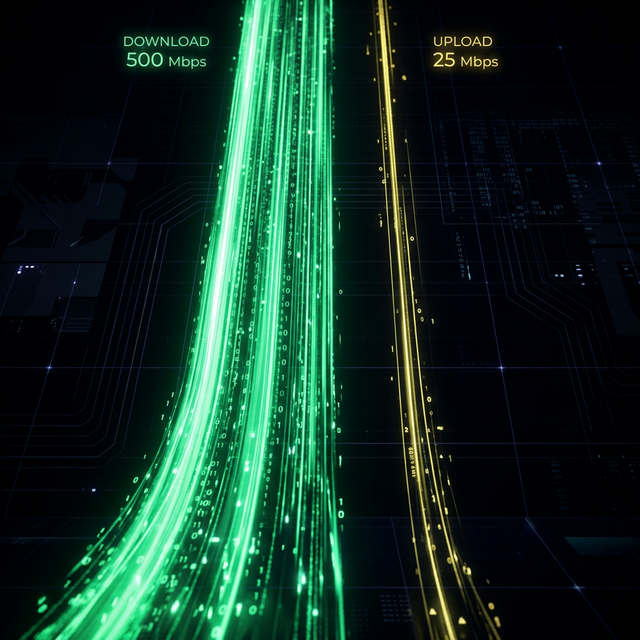
Download Speed vs Upload Speed: What Matters More?
Is your connection unstable?
Don't just guess. Use our real-time monitor to see exactly what's happening with your download, upload, and ping variance right now.
START REAL-TIME TEST