
5G Speed Test
5G promises blazing speeds, but real-world performance depends heavily on your location, carrier, and the type of 5G band you are connected to. Our continuous monitor reveals your actual 5G experience over time to help you understand what is considered a good internet speed for your needs — not just the marketing numbers.
Ready to test your 5G connection?
Our continuous real-time monitor runs directly in your browser. Uncover hidden latency and verify your 5G stability.
Launch Real-Time Speed TestUnderstanding 5G: Not All 5G Is Created Equal
When your phone displays a "5G" icon, it could be connecting to one of three very different technologies. The speed, latency, and reliability you experience depend entirely on which band your carrier deploys in your area.
Low-Band 5G
Sub-6GHz frequencies (600–900MHz). Wide coverage, penetrates buildings well, but speeds are only modestly better than 4G LTE.
Mid-Band 5G (C-Band)
The "sweet spot" at 2.5–3.7GHz. Balances speed and coverage. This is where most carriers are investing heavily in 2026.
mmWave 5G (Ultra-Wide)
High-frequency 24–47GHz. Extreme speeds but extremely short range. Only works outdoors, line-of-sight, near a tower.
5G Home Internet vs. Cable vs. Fiber
5G Fixed Wireless Access (FWA) is increasingly being marketed as a cable replacement. For many users — especially in areas without fiber — it is a viable option. But there are important tradeoffs to understand.
| Feature | 5G FWA | Cable | Fiber |
|---|---|---|---|
| Typical Speed | 100–300 Mbps | 200–1,000 Mbps | 500–5,000 Mbps |
| Latency | 25–50ms | 10–25ms | 5–15ms |
| Peak-Hour Stability | Variable | Moderate | Excellent |
| Installation | Self-install | Technician | Technician |
If you are considering 5G home internet, test your current connection first with our monitor. Then compare with a fiber speed test or read our fiber vs cable analysis.
Getting the Best 5G Performance
Window Placement for Home 5G
If using 5G fixed wireless, place your 5G gateway near a window facing the nearest tower. Walls — especially concrete and brick — significantly attenuate 5G signals. Even glass reduces signal strength by 5-10dB.
Check Your 5G Band
On Android, dial *#*#4636#*#* to access signal info showing which 5G band you're connected to. If you're on low-band (n71), try repositioning to connect to mid-band (n41 or n77) for significantly better speeds.
Test at Different Times
5G towers share capacity among all connected users. During peak hours (7–11 PM), tower congestion can halve your speeds. Use our continuous monitor to track your latency patterns throughout the day.
5G Speed Test FAQ
What speeds should I expect on 5G?
Is 5G good for gaming?
Why is my 5G speed slower than 4G sometimes?
Does 5G home internet replace cable?
Can weather affect 5G speeds?
Continue Reading

What Is Latency? Everything You Need to Know
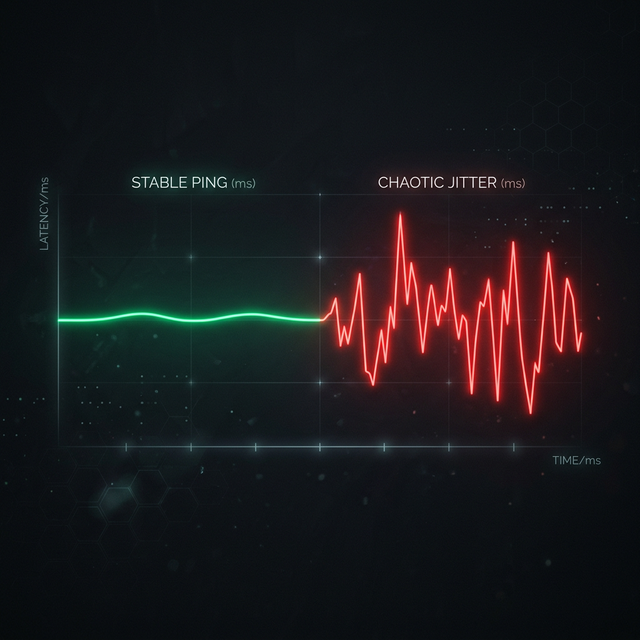
What is Jitter? A Simple Guide to Network Stability
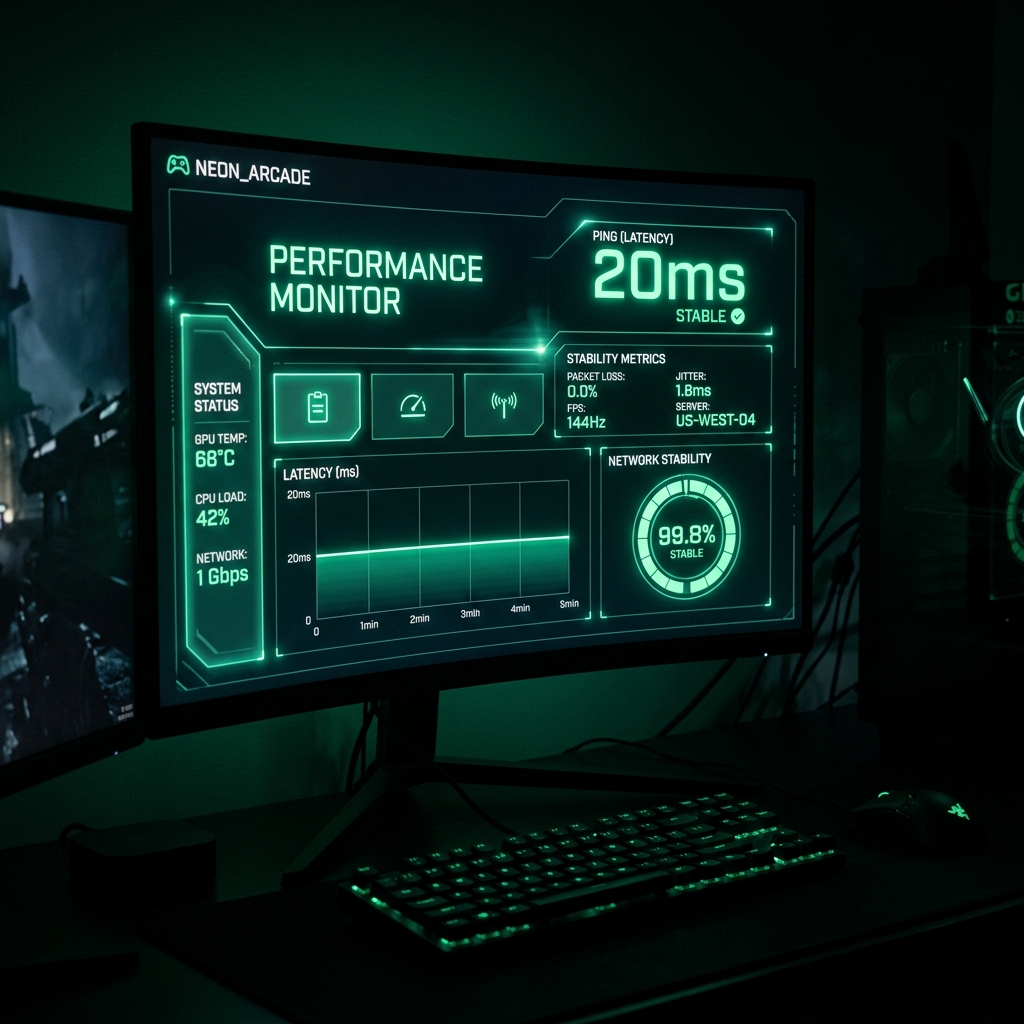
What is a Good Ping for Valorant, CS2, and Fortnite?
Is your connection unstable?
Don't just guess. Use our real-time monitor to see exactly what's happening with your download, upload, and ping variance right now.
START REAL-TIME TEST